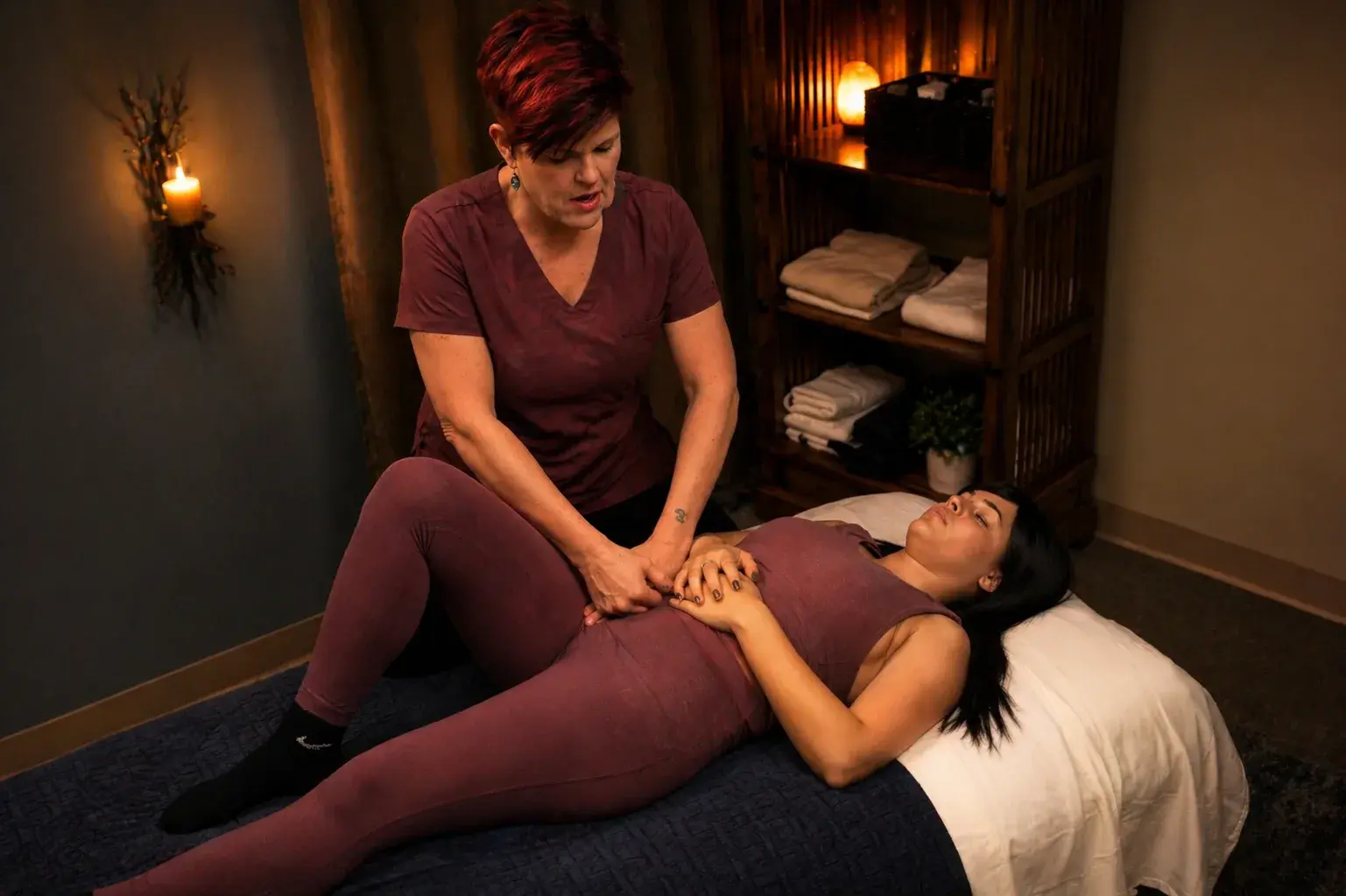
The psoas is one of the deepest and most influential muscles in the body. It connects the lumbar spine to the femur, crosses through the center of the body, and plays a major role in posture, walking, hip mobility, pelvic balance, and how supported the lower back feels. When it stays guarded for long periods, the body often feels compressed, braced, and harder to move through.
Clients rarely walk in saying, "my psoas hurts." They usually describe the consequences instead. They might say their lower back always feels tight, one hip never opens fully, their core feels rigid, or they cannot get comfortable after long periods of sitting. Those patterns do not always start in the psoas, but the psoas is often part of why the body keeps returning to the same tension loop. If that sounds familiar, start with the hip tightness guide or the low-back pain guide.
What the psoas actually influences
Because of where it sits in the body, the psoas has an outsized effect on how the trunk, pelvis, and hips relate to each other. When it is balanced, movement feels easier and more coordinated. When it is holding too much tension, the body often adapts in ways that create discomfort elsewhere.
- It can contribute to a constant pulling sensation in the low back.
- It can make the front of the hips feel shortened or compressed.
- It can affect stride length, gait efficiency, and comfort when standing up from sitting.
- It often interacts with breath patterns, abdominal guarding, and the feeling of being "switched on" all the time.
Why the psoas gets overloaded
The psoas tends to get overworked in modern life for very predictable reasons. Long periods of sitting, commuting, reduced hip extension, stress, old injuries, and compensation from other areas all push the body toward protective tension. In many people, the psoas starts doing more stabilization work than it should.
Stress matters here too. The psoas participates in patterns associated with bracing, guarding, and preparing the body to act. That does not mean every emotional issue is stored in one muscle. It does mean that people under chronic pressure often show a body pattern where the core never fully lets go.
What psoas-focused bodywork should feel like
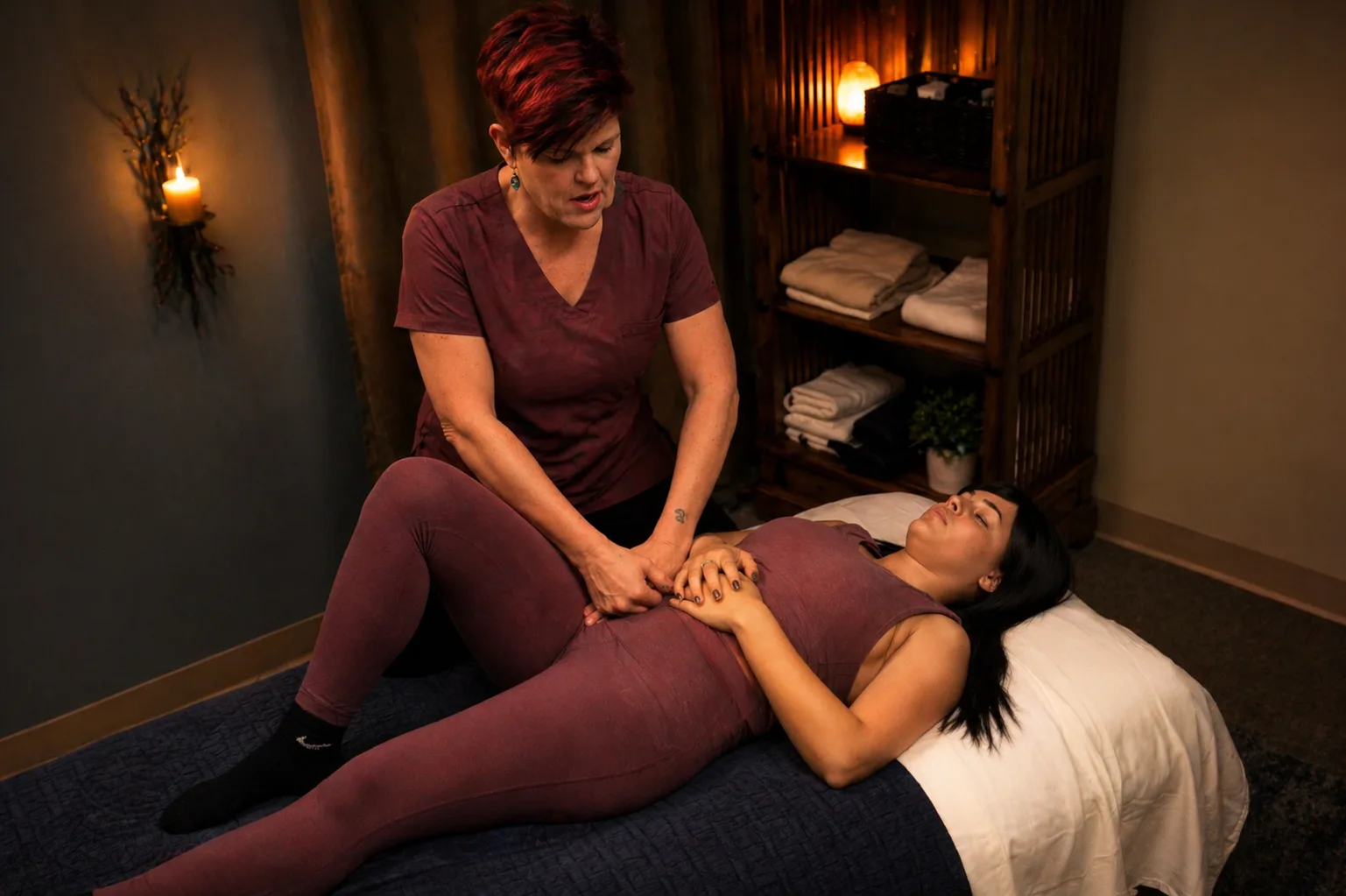
Good psoas work is precise, calm, and respectful. It is not about using force on a vulnerable area. In fact, aggressive pressure usually makes the body protect itself more. Effective treatment is usually slower and more strategic. The session may include surrounding structures like the diaphragm, abdominals, iliacus, hip flexors, adductors, glutes, and low back so the body has room to change as a system.
That is one reason this work tends to feel different from a generic massage. Instead of chasing soreness, the treatment looks at how tension is being organized through the center of the body.
Who may benefit from psoas release
- People with recurring low-back tightness that does not respond for long to standard massage.
- Clients who sit for work and feel compressed through the hips and front body.
- Active adults with restricted stride length, hip mobility, or asymmetrical movement.
- People whose stress shows up physically as core bracing, shallow breathing, and a constant need to "hold themselves together."
Common signs the psoas may be part of the issue
No single symptom proves the psoas is the problem, but these signs often show up in people who benefit from this kind of work:
- Low-back discomfort after sitting for long periods
- Tightness at the front of one or both hips
- Difficulty standing fully upright after driving or desk work
- A sense that the core is always gripping
- Hip mobility that improves briefly but never holds
What to expect in session
A well-run session should feel collaborative. There may be breath cues, pacing changes, and treatment around the area before any direct psoas-focused work begins. The goal is to reduce resistance, not overpower it. After treatment, some clients feel immediate openness. Others notice the biggest improvement later in walking, standing, or how much less they brace during the day.
When psoas release is not the whole answer
Psoas work can be helpful, but it is rarely the only factor. Many people also need attention to glutes, adductors, low back, ribcage mobility, jaw tension, posture habits, training load, or nervous system regulation. That is why a customized treatment plan tends to work better than a one-technique approach.
How to know if this fits your body
If your body feels persistently compressed through the front of the hips, tight through the low back, and difficult to settle, psoas-focused work may be worth exploring. The best next step is to read more about psoas release in Denver, then book a session and describe the pattern clearly so the treatment plan matches what is actually showing up in your body right now.