TMJ discomfort often shows up as jaw pain, but it rarely stays isolated there. People who clench or grind commonly carry tension through the temples, cheeks, neck, throat, shoulders, and upper chest. They may wake up sore, feel headaches build by mid-day, or notice that stress instantly shows up in the jaw before they even realize they are bracing. If this sounds like you, the jaw clenching guide and tension headaches guide are useful starting points.
What TMJ dysfunction can feel like
Not every person experiences TMJ issues in the same way. Some people feel sharp joint irritation. Others mainly notice muscle fatigue, facial pain, or headaches. Common complaints include:
- Jaw clicking, locking, or stiffness
- Pain with chewing, yawning, or talking for long periods
- Headaches that build through the temples or behind the eyes
- Facial soreness, cheek tightness, or tooth pressure from clenching
- Neck and shoulder tension that keeps returning
Why jaw tension spreads into the rest of the body
The jaw is tied into a larger chain. The muscles of mastication, the neck, the tongue, the front body, and even breathing mechanics can all influence how much strain the TMJ area carries. That is why some clients do not respond well to isolated jaw work alone. If the neck, chest, or upper shoulders are reinforcing the same pattern, the body simply recreates the tension.
What TMJ massage can include
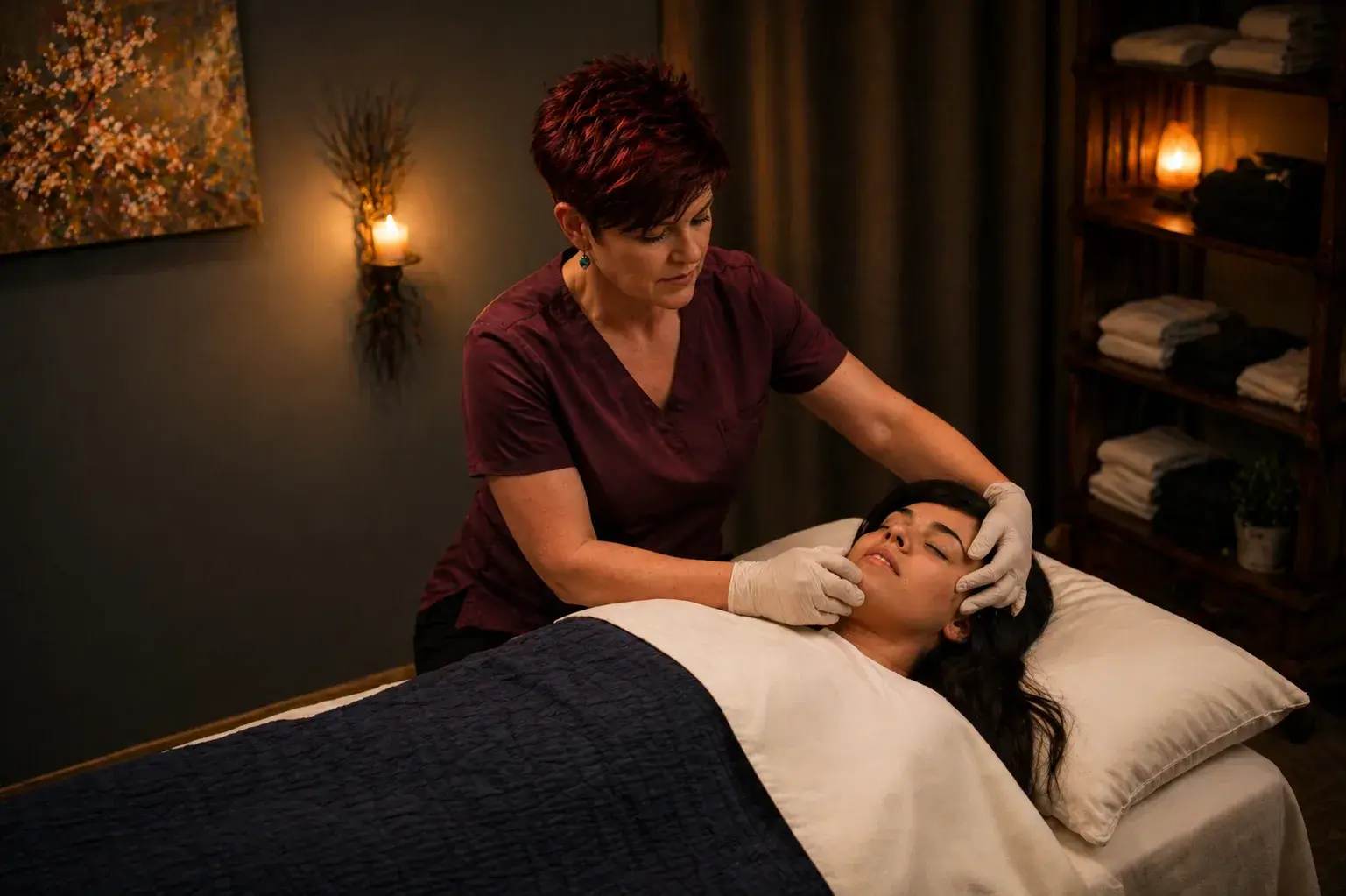
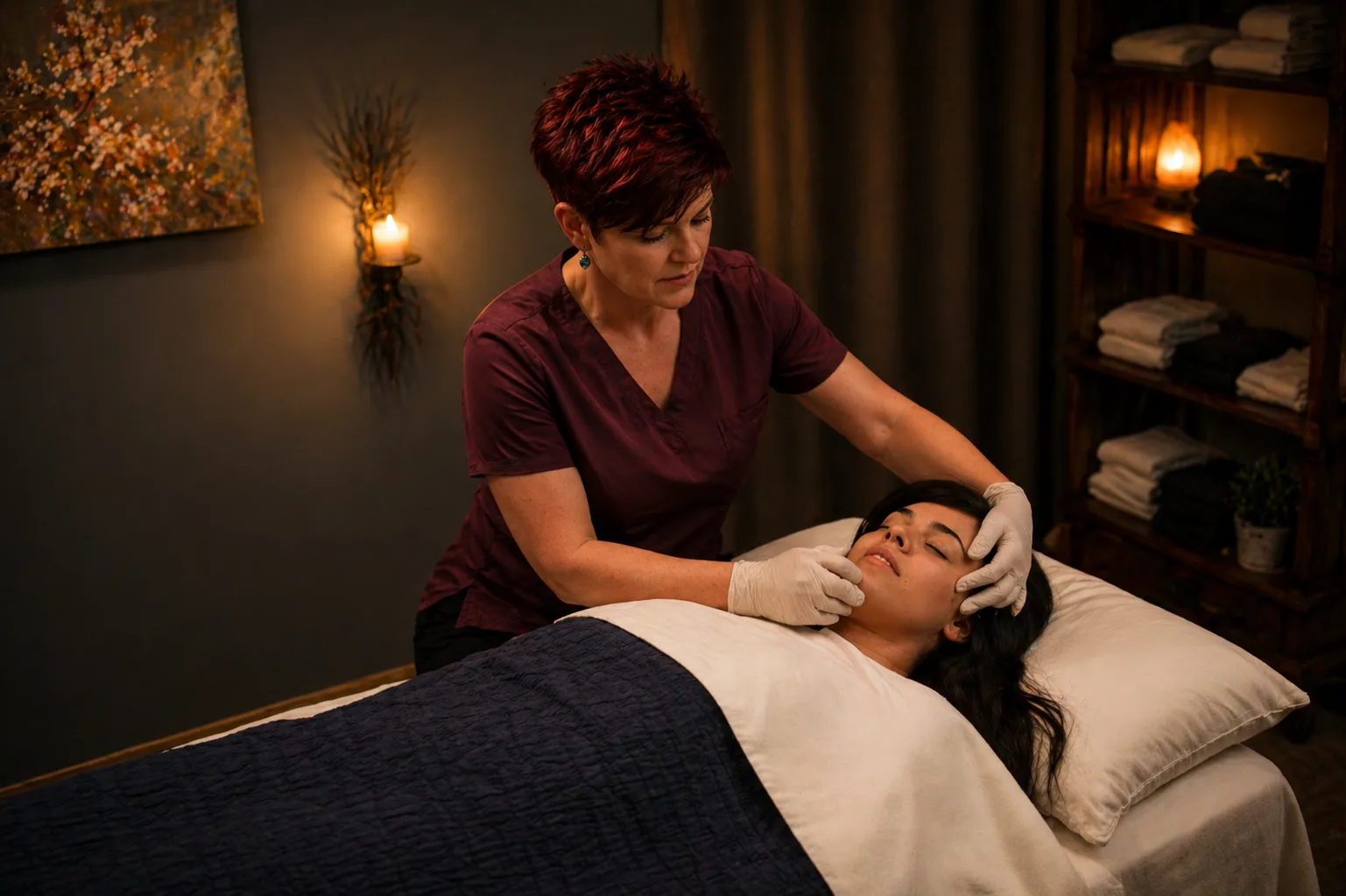
TMJ-focused massage usually begins with careful assessment and external work. Treatment may involve the jaw muscles, temples, scalp, front of the neck, suboccipitals, shoulders, and upper chest. In some settings and where appropriate, intraoral work may also be part of care, but only with clear consent and a treatment reason.
The purpose is not to "dig into" a sensitive area. The purpose is to reduce strain, improve movement quality, and calm the broader pattern that keeps reloading the jaw.
Who tends to benefit most
- People who clench during work, stress, or sleep
- Clients with tension headaches that seem to start in the face or temples
- People whose neck and jaw pain flare together
- Clients who have tried general massage but still feel jaw and facial tightness return quickly
What a good session should feel like
Effective TMJ treatment feels specific, but it should still feel safe and measured. You should understand what is being treated and why. Most people respond better when the session also helps the nervous system downshift instead of pushing harder and harder into irritated tissue.
Why headaches and TMJ often travel together
Many people do not realize that their headache pattern is being reinforced by jaw tension. Clenching can overload the temples, forehead, and upper neck. If you are constantly recruiting the jaw and neck to manage stress, work posture, or sleep-related bracing, the result may feel like "just headaches" even though the jaw is part of the pattern.
What to do outside the treatment room
Massage works best when combined with awareness. That may mean noticing when your teeth are touching during the day, reducing non-essential clenching, paying attention to workstation posture, managing stress input, and following up on dental or sleep-related recommendations when needed.
When to seek broader evaluation
If you have severe joint locking, major bite changes, intense pain, or symptoms that suggest dental or medical involvement, massage should be part of a broader care plan, not the only step. Good therapeutic work supports the body well, but it should not replace needed evaluation.
The practical goal of TMJ massage
The goal is simple: less clenching, less facial strain, fewer headache triggers, and more ease through the jaw and neck. For many clients, that kind of relief changes more than just pain levels. It changes sleep, focus, and how much energy they spend fighting tension all day. If that sounds like your pattern, learn more about TMJ massage in Denver.